Welcome to TURBONB
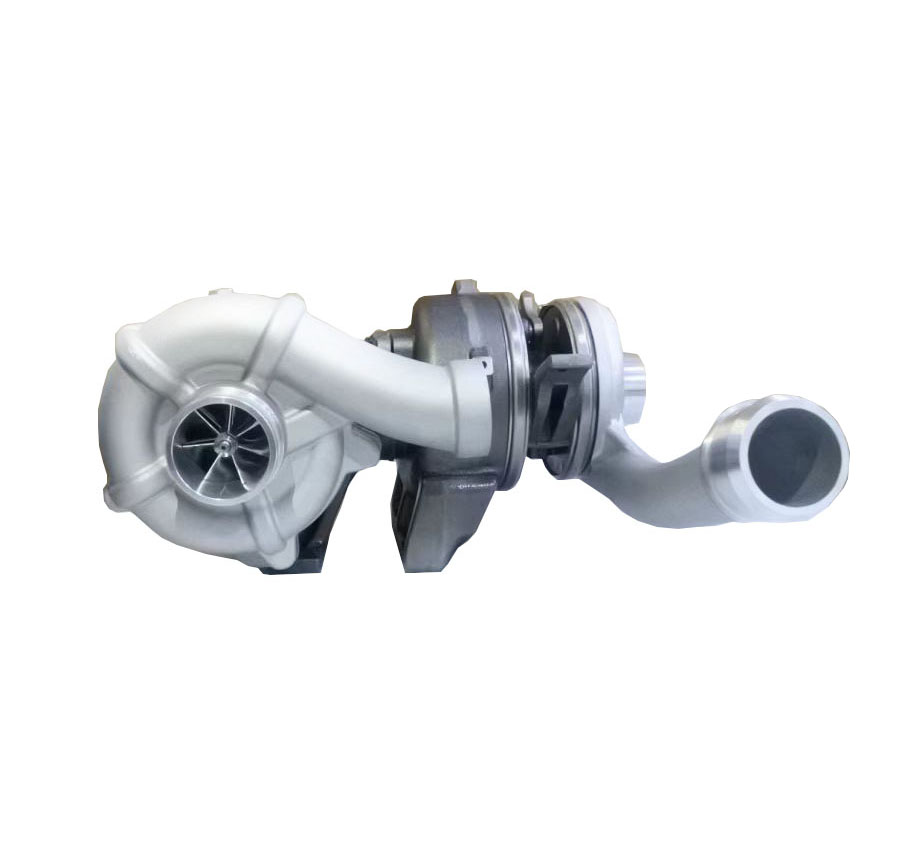
Turbocharger is a kind of air compressor driven by the exhaust gas generated by the operation of internal combustion engine through a structure of two coaxial impellers.Similar to a supercharger, both increase the flow of air into an internal combustion engine or a boiler, thereby increasing combustion efficiency.Commonly used in automobile engines, turbochargers can increase the output power of an internal combustion engine or improve fuel economy at the same output power by using the heat and flow of exhaust gases。 Turbocharger consists of:CHRA,TurbineHousing,CompressorHousing,BearingHousing,ShaftWheel,CompressorWheel,Actuator,Nozzle Ring,Repair Kits.
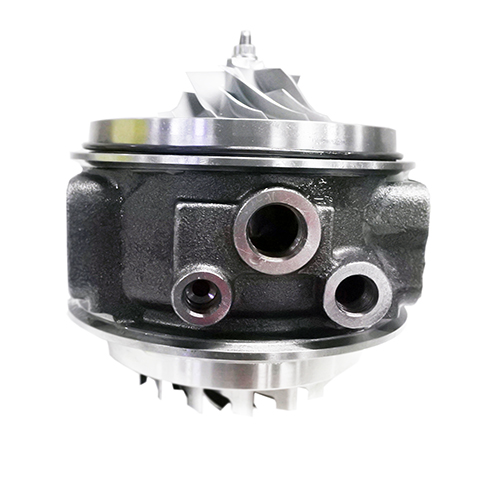
CHRA serves as the mounting point for both housings and must be made of substantial material to handle the heat and stress of the turbine. CHRA is to support and lubricate the turbocharger’s bearings,CHRA consists of:TurbineHousing,CompressorHousing,BearingHousing,ShaftWheel,CompressorWheel,Actuator,Nozzle Ring,Repair Kits
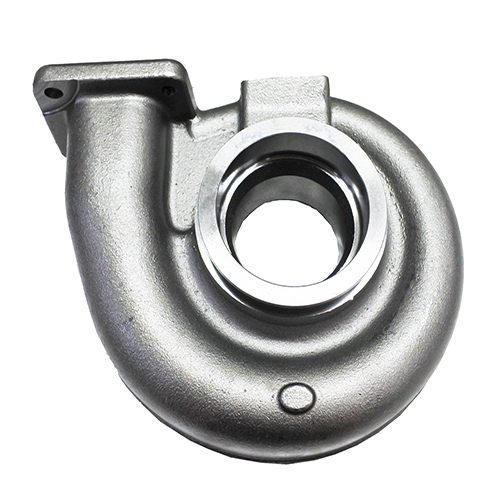
Turbine Housing Material: Middle Si-Mo ( with 3.8% Mo), made by Die Casting
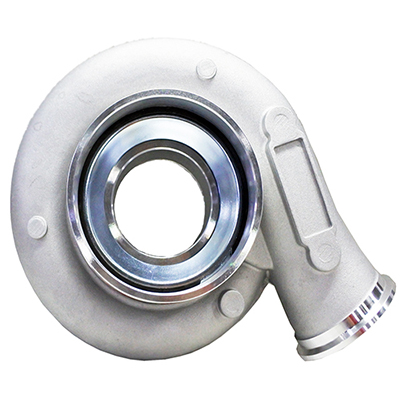
Compressor Housing Material: Aluminum 105, made by Casting
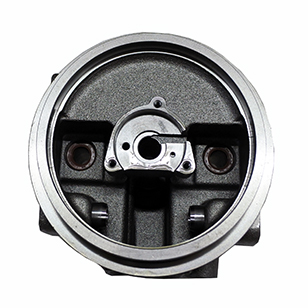
Bearing Housing Material: Grey Iron 250, made by Casting
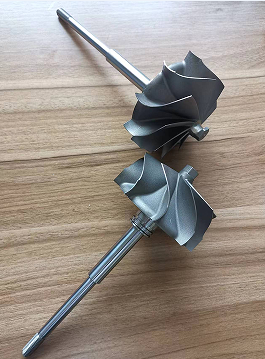
The turbine wheel is responsible for converting heat and pressure into rotational force. Turbine Wheel material,K418 made by Forging Turbine Shaft material, 42 CrMo made by Forging The turbine wheel converts kinetic energy into rotation. As the turbine wheel rotates, it spins the turbine shaft, which in turn spins the compressor wheel. Often overlooked, turbine wheel selection is critical to a properly built turbocharger system, as having too small of a turbine wheel will induce excessive backpressure and can choke the engine, making it lose power. On the other hand, selecting too large of a turbine will result in increased lag and can make it difficult to achieve specific target boost numbers
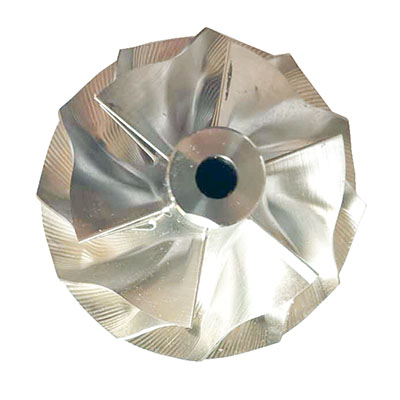
The compressor wheel's job is to compress fresh air and funnel it towards the throttle body. Since it is connected directly to the turbine wheel via the turbine shaft, the compressor wheel rotates at the same RPM as the turbine wheel and, as the engine and turbine wheel accelerate, so does the compressor wheel. This process creates pressure in the intake tract.Compressor Wheel material C355 made by Forging
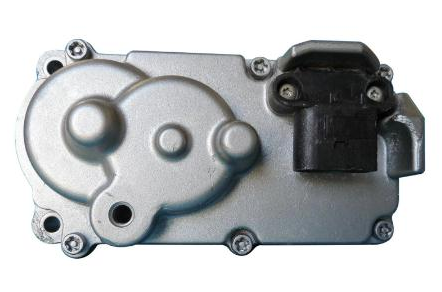
A wastegate is simply a device that bleeds off exhaust gas before it reaches the inlet of the turbine housing. As exhaust fills the manifolds, it is directed toward the turbocharger and enters the turbine housing before expanding across the turbine wheel and exiting through the downpipe. In a closed system, the turbine would see all of the exhaust throughout the engine’s operating range and boost would continue to rise, uncontrollably, until either the throttle was shut or the turbine wheel reached its choke point. For most engines, this would create an excessive amount of boost/airflow and destroy parts, leaving you with a couple of melted pistons at best or a giant hole in the block (much more likely). To control boost and overall engine power, turbocharger systems rely on wastegates, which are mounted before the turbine housing (or inside of it in the case of an internally-gated turbo), and act as a controlled bypass for a percentage of exhaust gas to regulate turbine speed and, thus, overall boost
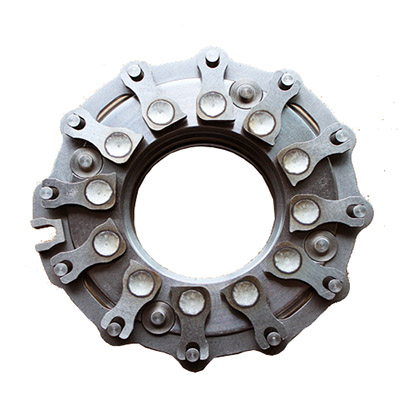
VNT designed to allow the effective aspect ratio (A:R) of the turbo to be altered as conditions change. This is done because optimum aspect ratio at low engine speeds is very different from that at high engine speeds. If the aspect ratio is too large, the turbo will fail to create boost at low speeds; if the aspect ratio is too small, the turbo will choke the engine at high speeds, leading to high exhaust manifold pressures, high pumping losses, and ultimately lower power output. By altering the geometry of the turbine housing as the engine accelerates, the turbo's aspect ratio can be maintained at its optimum. Because of this, VNT have a minimal amount of lag, have a low boost threshold, and are very efficient at higher engine speeds. VGTs do not require a wastegate
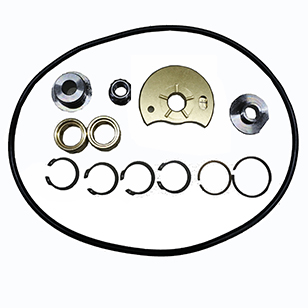
Repair Kits consists of Journal Bearing, Thrust Bearing, O Ring, Retaining ring,Piston Ring,Thrust collars and spacer